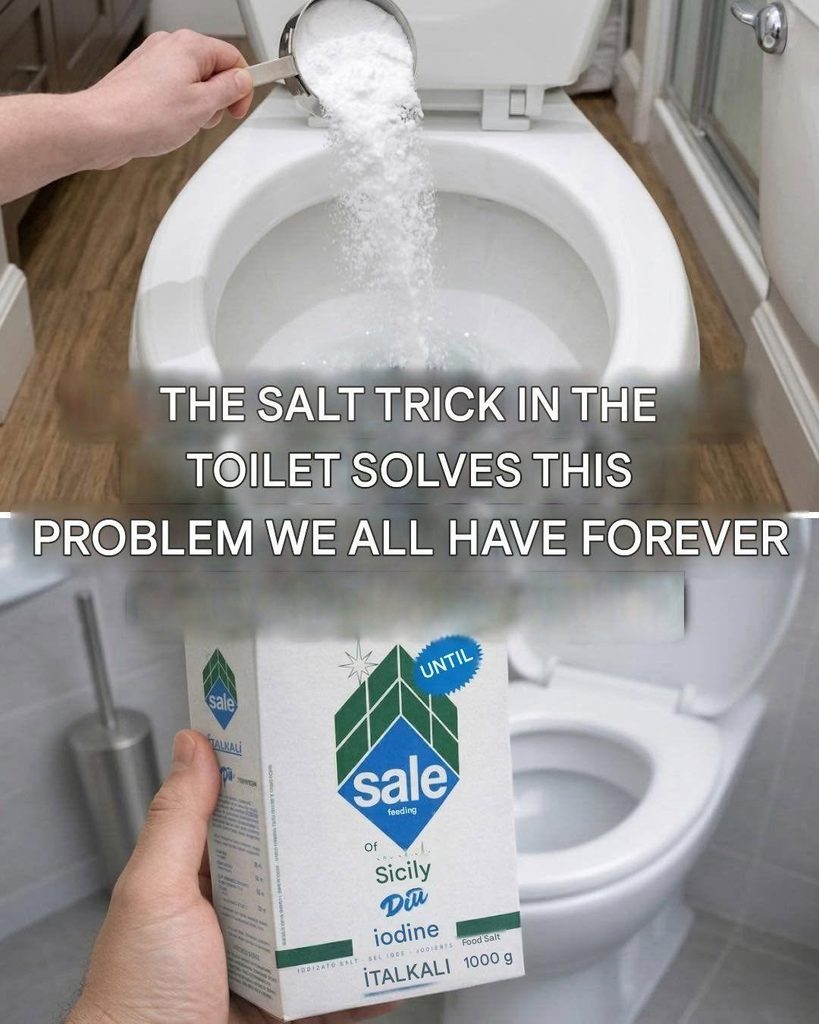
There is a simple household cleaning trick that has been making the rounds online: putting ordinary table salt into the toilet. The idea sounds almost too easy, but salt can be useful as part of a basic bathroom-cleaning routine, particularly when you’re dealing with unpleasant odors or light residue.
However, it is important to understand what this trick can actually do. Salt is not a miracle toilet cleaner and it does not permanently remove every type of stain, mineral deposit, or blockage. Used correctly, though, it can be an inexpensive addition to your regular toilet-cleaning routine.
To try the simple method, start with a clean and relatively dry toilet bowl. Sprinkle a modest amount of ordinary table salt around the inside of the bowl, concentrating on areas where residue or light buildup is visible.
Allow it to sit for several minutes. The salt can provide mild mechanical action when combined with brushing, helping loosen some surface residue. Afterward, use a toilet brush to scrub the bowl thoroughly, paying particular attention to the waterline and areas where buildup tends to collect.
Flush the toilet thoroughly after cleaning.
For stronger mineral deposits caused by hard water, salt alone is unlikely to be enough. Those white, yellow, or brown rings are usually mineral deposits and generally require an appropriate toilet-bowl cleaner designed to dissolve limescale or mineral buildup.
Salt may also help absorb or reduce certain odors temporarily, but persistent toilet odors usually have an underlying cause. Poor ventilation, buildup beneath the rim, dirty surfaces around the toilet, a drain problem, or plumbing issues can all contribute to unpleasant smells.
If the odor continues even after thorough cleaning, don’t simply keep adding more salt. Check the surrounding bathroom and consider whether the toilet or plumbing needs professional attention.
One important mistake to avoid is mixing salt with random cleaning chemicals. Many viral cleaning recipes combine several household ingredients, but this can be dangerous. Never mix bleach with acids, ammonia, or other cleaning products because dangerous fumes can be produced.
If you’re using a commercial toilet cleaner, follow the instructions on the label and use it by itself unless the manufacturer specifically indicates that another product can safely be combined with it.
You also don’t need to pour large quantities of salt into the toilet. More is not necessarily better. Excessive amounts provide little additional cleaning benefit and simply create unnecessary material going down the plumbing.
