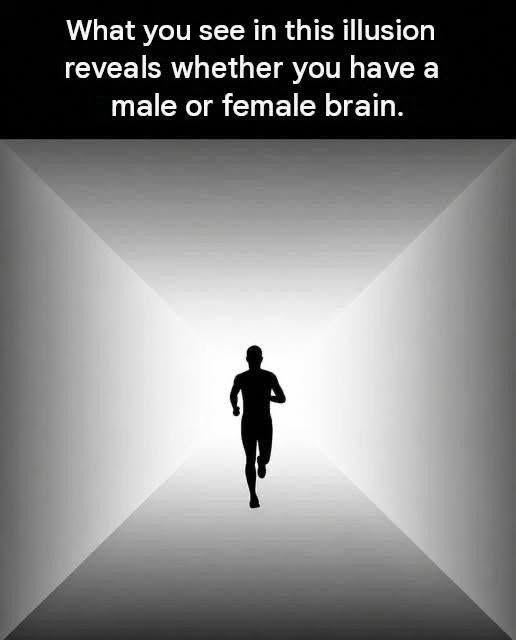
Optical illusions are designed to make the brain interpret visual information in unexpected ways. A simple image can sometimes appear to change depending on what you notice first, how you interpret movement, or which visual details your brain prioritizes. This is what makes these images so fascinating—and so popular on social media.
One viral claim suggests that what you see in an optical illusion can reveal whether you have a “male brain” or a “female brain.” The image may show a silhouette appearing to move through a tunnel, while different viewers report noticing different details about the figure or its direction.
But there is an important distinction between an entertaining personality test and a scientifically validated psychological assessment. Seeing one interpretation of an optical illusion does not prove that someone has a masculine or feminine brain.
Your brain constantly makes rapid predictions about what your eyes are seeing. When an image contains ambiguous information, your visual system has to decide how to interpret shapes, movement, depth, lighting, and perspective. Different people can therefore perceive the same image differently.
This can happen because of attention, previous experiences, expectations, viewing conditions, visual processing, and even the way the image is displayed.
The same person may also interpret an illusion differently at different times. If you stare at an ambiguous image long enough, your perception may change. You may suddenly notice movement in another direction or see a different shape than you noticed initially.
That doesn’t mean your brain has changed from “male” to “female” or vice versa.
