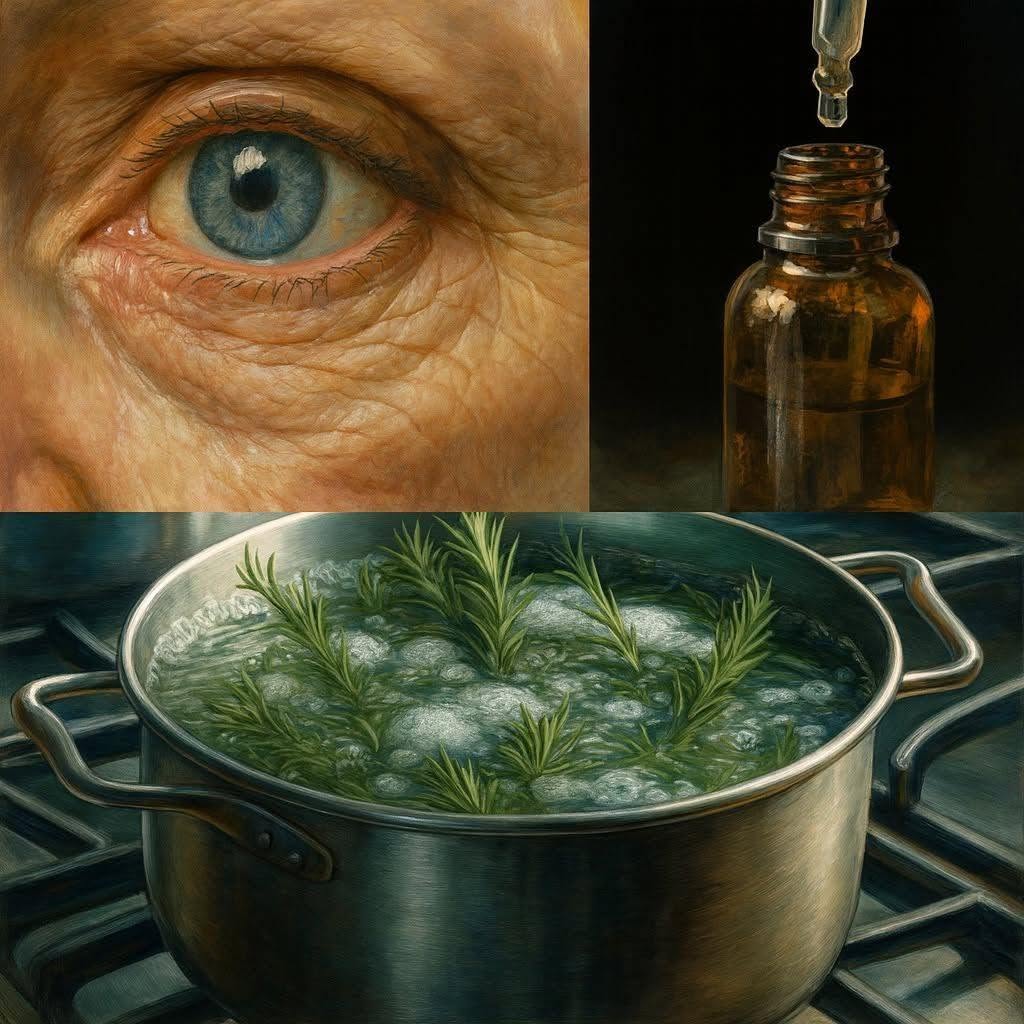
Rosemary has been used for centuries in traditional wellness practices and is well known for its distinctive aroma and naturally occurring plant compounds. Because rosemary contains antioxidants and other bioactive compounds, it is sometimes promoted online as a natural remedy for tired eyes, inflammation, blurred vision, and even cataracts.
However, there is an important distinction between supporting general eye wellness and treating an eye disease. Rosemary water or rosemary oil has not been proven to dissolve cataracts, restore lost vision, or cure eye inflammation. Cataracts involve changes to the eye’s natural lens, and established cataract treatment requires evaluation by an eye-care professional.
If you enjoy rosemary as a traditional herbal preparation, you can make a simple rosemary infusion. Begin with a small handful of fresh rosemary sprigs and rinse them thoroughly under clean running water. Place the rosemary in a saucepan with about two cups of water and bring it to a gentle boil.
Reduce the heat and allow the rosemary to simmer for approximately 5–10 minutes. Turn off the heat and let the preparation cool completely. Strain the liquid carefully and discard the rosemary leaves.
This cooled infusion can be used as a general herbal drink if it is suitable for you, but it should not be placed directly into the eyes. Homemade herbal water is not sterile and may contain microorganisms or particles that can cause an eye infection or irritation.
The same caution applies to rosemary essential oil. Essential oils are highly concentrated and should never be put directly into the eyes. Even a small amount can cause significant irritation or injury to the delicate surface of the eye.
For people concerned about eye health, everyday habits are far more important than a single homemade remedy. Eating a varied diet containing leafy green vegetables, colorful fruits and vegetables, fish, nuts, and other nutrient-rich foods can support overall nutrition. Protecting the eyes from excessive ultraviolet exposure with appropriate sunglasses, avoiding smoking, controlling blood pressure and blood sugar, and having regular eye examinations are also important.
