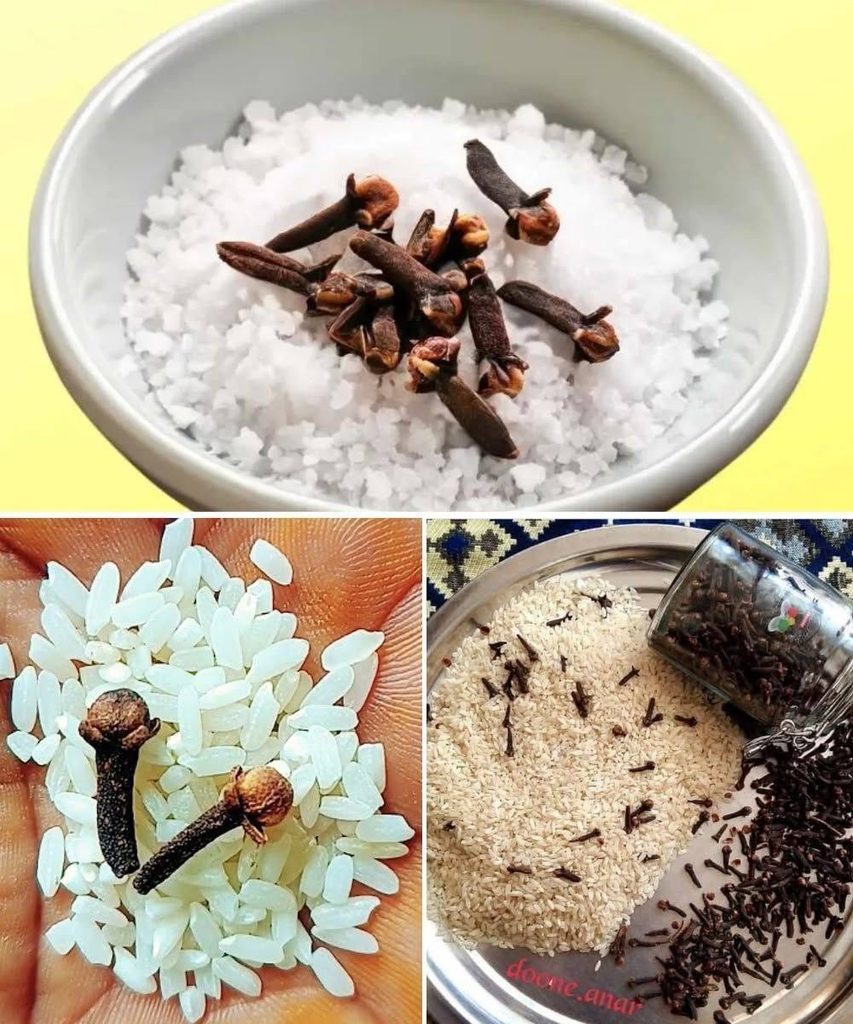
Putting a few whole cloves into a bag or container of rice, beans, or other dry foods is an old household trick that many people use because cloves have a strong natural aroma. The scent can make the pantry less attractive to some insects, and clove compounds have shown insect-repellent or insecticidal activity in certain laboratory and storage studies. However, cloves should not be considered a guaranteed solution for pantry pests or a substitute for proper food storage.
If you want to try this simple kitchen method, use a few whole cloves rather than ground cloves. Place them in a small breathable sachet or a clean piece of food-safe fabric and keep the sachet near the dry-food container. You can use the same idea around stored rice, dried beans, lentils, flour, or other pantry staples. Keeping the cloves contained makes them easier to remove and prevents them from becoming mixed throughout the food.
The most important step, however, is proper food storage. Rice and beans should ideally be kept in clean, airtight glass, metal, or heavy-duty food containers with tightly sealed lids. Thin plastic bags and cardboard packaging may not provide enough protection from pantry insects. Keeping dry foods in a cool, dry pantry can also help reduce the conditions that allow stored-food pests to multiply.
If you discover small beetles, weevils, moths, larvae, webbing, or unusual holes in your rice or beans, adding cloves to the container is not enough. The affected food should be separated from other products and inspected carefully. Pantry insects can spread from one package to another, so check nearby flour, pasta, cereal, grains, nuts, spices, pet food, and other dried products.
See more on the next page
